



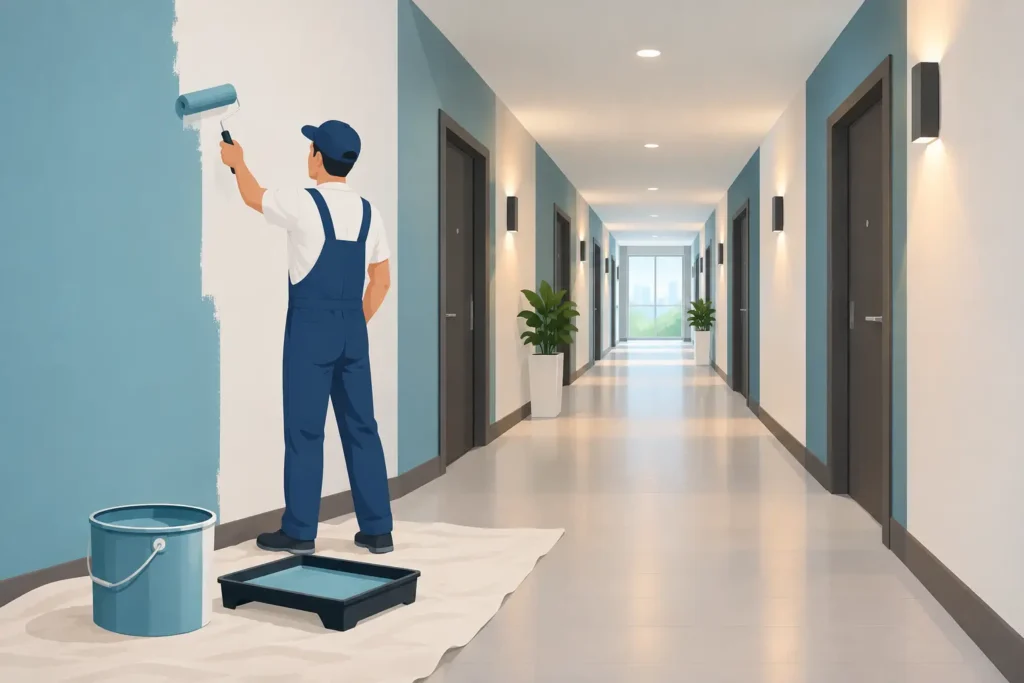
A worn lobby wall, scuffed corridor, or dated boardroom color can make an otherwise well-run business look neglected. This office repainting guide helps business owners, property managers, and facility teams plan a professional paint project that improves appearance without creating unnecessary disruption for staff, tenants, or customers.
Office painting is not just a cosmetic decision. The right finish protects high-touch surfaces, supports a cleaner environment, reinforces your brand, and helps maintain the value of the property. The wrong approach can lead to peeling paint, strong odors, missed deadlines, and crews working around an office that was never properly prepared.
Start With the Purpose of the Repaint
Before selecting a color or requesting a quote, identify what the repaint needs to accomplish. A growing company may need to update its space to match new branding. A landlord may be preparing a unit for a new tenant. A facility manager may be addressing visible wear in hallways, washrooms, lunchrooms, and reception areas.
The purpose affects the scope, product selection, and schedule. A quick refresh of occupied offices is different from a full renovation that includes drywall repair, ceiling work, doors, trim, and common areas. Be clear about which areas need attention and whether the work is intended to solve a surface problem, improve employee experience, prepare for occupancy, or create a stronger client-facing impression.
Walk the space with a practical eye. Look for dents, failed caulking, nail holes, water stains, cracks, peeling paint, and damage around door frames and corners. Paint will not correct poor surfaces on its own. Proper preparation is what separates a clean, durable result from a temporary cover-up.
Build a Scope Before You Choose Colors
A complete office repainting scope should identify the rooms, wall surfaces, ceilings, trim, doors, and high-traffic areas that need work. It should also account for repairs, furniture moving, protection of floors and equipment, and access requirements.
Offices often have more paintable surfaces than expected. In addition to private offices and meeting rooms, consider reception areas, corridors, stairwells, storage rooms, kitchens, washrooms, elevator lobbies, mechanical rooms, and tenant entrances. If only some areas are being painted, decide where logical stopping points will be. Stopping midway through a connected hallway or using a near-match color can make the work look incomplete.
For multi-tenant buildings and larger workplaces, phasing may be the best option. A contractor can paint one floor, department, or wing at a time so the operation remains functional. This can take longer than an empty-space project, but it reduces disruption and gives management more control over access.
Choose Paint That Fits the Space
Office paint should be selected for performance, not only color. Walls in a quiet executive suite do not take the same abuse as a busy reception area or a warehouse office. Higher-traffic spaces usually benefit from durable, washable coatings that can stand up to routine cleaning and touch-ups.
Finish level matters as well. Flat paint helps reduce visible glare and can hide minor wall imperfections, making it a reasonable choice for ceilings and low-contact areas. Eggshell and satin finishes are commonly used on office walls because they offer better washability while maintaining a professional appearance. Semi-gloss is often suited to doors, trim, and frames because it holds up well against scuffs and repeated contact.
There is a trade-off. Higher-sheen paint is easier to clean, but it also shows poor drywall work, patching, and roller marks more clearly. If walls are heavily damaged, repairs and proper priming need to be part of the job before a washable finish is applied.
Low-odor, low-VOC products are a smart choice for occupied workplaces, especially where employees, visitors, or tenants will return shortly after painting. They can help reduce odor concerns, but they do not eliminate the need for ventilation, curing time, and a clear work schedule.
Use Color to Support the Way the Office Works
Neutral colors remain popular in commercial offices because they work with different furniture, signage, and future tenants. Soft whites, warm grays, greiges, and muted beige tones can make spaces feel brighter and more open without becoming distracting.
That does not mean every room needs to look the same. Accent walls can be effective in a reception area, conference room, collaboration zone, or branded feature wall. The key is restraint. A strong color can make an impact when it is used intentionally, while too many competing colors can make a workplace feel dated or disorganized.
Consider lighting before approving a final color. A shade that looks clean in a paint store may appear blue, yellow, or much darker under office lighting. Natural light, LED temperature, window direction, and surrounding finishes all affect the result. Testing samples on the actual wall is worth the effort, particularly for large spaces or branded colors.
Plan the Schedule Around Business Operations
The best office repainting projects are planned around people, not just square footage. Painting during standard business hours may be possible for quiet areas, but meeting rooms, reception spaces, and shared corridors may require after-hours or weekend work.
An experienced commercial painting contractor should help determine which areas can remain occupied and which need to be temporarily closed. They should also coordinate access, building rules, loading procedures, elevator use, security requirements, and cleanup expectations before the first drop cloth is laid down.
Furniture and technology need a plan too. Small items should be removed by staff or management before work begins. Larger desks, filing systems, and workstations can often be moved and covered in place, depending on the room layout. Computers, monitors, printers, and exposed electronics should be protected from dust and accidental splatter.
Do not schedule painting too tightly against a major client event, inspection, move-in, or reopening. Drying time is not the same as full cure time, and unexpected drywall repairs can add time to the project. A realistic schedule gives the crew room to complete preparation properly instead of rushing the finish.
Preparation Determines the Quality of the Result
Good paintwork starts with surface preparation. Walls should be cleaned where necessary, loose material removed, cracks and holes repaired, and damaged areas sanded smooth. Stains from water, smoke, markers, or previous leaks may need specialty primer so they do not bleed through the new coat.
In older offices, it is common to find several layers of paint, old adhesive from signage, rough patches, and poorly repaired damage. These conditions should be assessed during the site visit, not discovered after the project has started. Clear scoping and approved pricing protect both the client and the contractor when repair work is needed.
Protection and cleanliness matter just as much as the coating itself. Floors, glass, fixtures, furniture, and adjacent surfaces should be carefully covered. At the end of each shift, work areas should be left safe, orderly, and ready for the next phase of the project.
Hire for Commercial Experience, Not Just a Low Price
Office painting requires more coordination than a simple room repaint. The contractor must be able to manage occupied spaces, maintain a clean jobsite, work within building rules, and communicate clearly with management throughout the project.
Ask whether the contractor is licensed, insured, and experienced with commercial properties. Confirm what is included in the quote, including surface repairs, primer, paint quality, number of coats, protection, cleanup, and touch-ups. A vague estimate can become a costly problem when the work begins.
The lowest quote is not always the best value. A lower price may leave out repairs, use lower-grade coatings, or assume a schedule that does not fit your operations. A professional proposal should make the scope understandable so you know what result you are paying for.
For offices in Toronto and the GTA, JXF Painting Service provides commercial painting support with the preparation, scheduling, and clean workmanship needed for active business environments.
Inspect Before the Crew Leaves
A final walkthrough should happen while the crew is still available to address small items. Review walls from different angles and under the normal lighting used in the office. Check around outlets, door frames, ceiling lines, corners, and repaired areas where imperfections are most likely to show.
Look for missed spots, uneven coverage, paint on adjacent surfaces, rough patches, or areas that need a final touch-up. Keep realistic expectations for older walls, but do not accept avoidable defects. Professional painting should leave the space looking consistent, clean, and ready for business.
A well-planned repaint does more than freshen the walls. It gives employees a better place to work, gives visitors confidence in the business, and protects the surfaces your property depends on every day. Start with a clear scope, allow enough time for proper preparation, and choose a painting team that treats your office like an active workplace, not an empty room.