


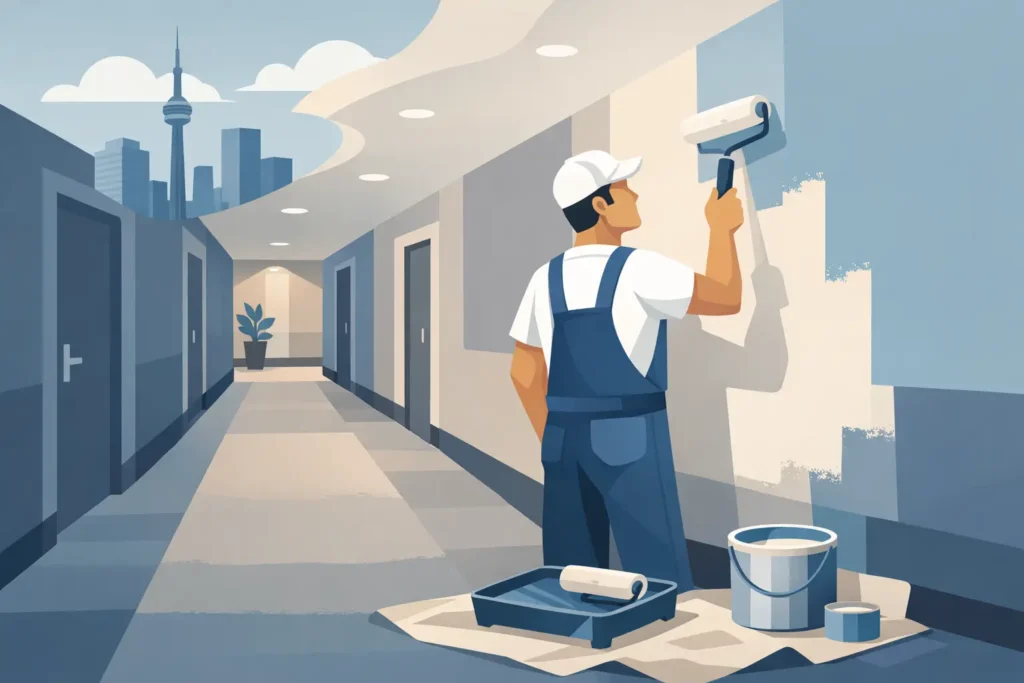
Painting an occupied property is not a standard paint job with people working around it. A guide to painting occupied buildings starts with one principle: the building still has to function while the work is underway. Tenants need access, staff need safe routes, residents need advance notice, and customers should never feel as though they have entered a construction zone.
For offices, condos, retail locations, warehouses, and occupied homes, the finish matters. So does the way the work is planned, contained, cleaned, and communicated. The right painting contractor protects the property, respects the people in it, and keeps the project moving without unnecessary disruption.
Start With a Site Plan, Not a Paint Color
Before selecting paint, walk the property and identify how people use it. A lobby may have heavy traffic before 9 a.m. and after 4 p.m. An office conference room may be available only on weekends. In a condo, elevators, hallways, garbage rooms, and loading areas all require coordinated access. In a warehouse, forklift routes and production areas cannot be blocked without a clear plan.
A proper site assessment should identify occupied zones, restricted areas, emergency exits, ventilation conditions, furniture and equipment that must remain in place, and surfaces requiring repair. It should also establish where painters can stage materials, wash tools, store ladders, and dispose of waste without creating hazards.
This is where a detailed scope prevents problems later. If drywall repairs, water damage, peeling coatings, failed caulking, or staining are discovered after work begins, the schedule may need to change. Addressing those conditions upfront gives owners and facility managers a more accurate price and a practical timeline.
Plan the Work Around Building Operations
Occupied-building painting is usually completed in phases. Instead of closing an entire floor or facility, the contractor divides the project into manageable sections and releases each area after inspection and cleanup. This approach helps maintain access while giving the paint enough time to dry and cure properly.
The best schedule depends on the property. An office may be painted after hours or on weekends. A retail space may need work done before opening, after closing, or in short overnight shifts. Residential interiors often work best one room at a time, while commercial common areas may require carefully planned daytime work with barriers and alternate walkways.
Speed is valuable, but rushing can create more downtime. Paint applied too quickly between coats, poor surface preparation, or inadequate drying time can lead to flashing, peeling, roller marks, and premature failure. A dependable contractor balances production speed with the conditions needed for a durable finish.
Set Clear Access Rules
Confirm which doors, halls, stairwells, elevators, and washrooms remain open each day. If a corridor must be closed temporarily, provide a marked alternate route. If painters require elevator access in a high-rise building, reserve service periods where possible and protect elevator walls and floors before moving equipment.
For homes, access rules are just as useful. Decide which rooms are available, where pets will stay, whether children need a clear path through the home, and where furniture can be moved or covered. Small decisions made before the first drop cloth goes down make the project far easier for everyone.
Protect People, Furnishings, and Finished Surfaces
Clean workmanship is not an extra. It is part of the job. Floors, furniture, fixtures, computers, displays, shelving, and mechanical equipment need appropriate protection before preparation begins. Professional painters use floor coverings, plastic containment, masking materials, and careful staging to keep paint, dust, and tools under control.
The level of containment depends on the work. Repainting clean walls in a vacant meeting room requires less protection than sanding damaged drywall in an active office. Ceiling repairs, popcorn ceiling removal, and extensive patching can create fine dust that travels farther than expected. These areas may require temporary barriers, controlled entry points, and more intensive cleanup between shifts.
Protection also applies to the building itself. Fire alarms, sprinkler heads, air returns, security devices, signage, and door hardware should be identified before work starts. Paint should not be sprayed or rolled near sensitive systems without the right masking and safeguards. When a surface cannot be protected effectively, it may need to be removed, covered differently, or completed during an off-hour window.
Control Dust, Odors, and Airflow
Odor and air quality are common concerns in occupied spaces, particularly in healthcare-adjacent offices, residential buildings, schools, food-related businesses, and facilities with employees working long shifts. Low-VOC and low-odor coatings can reduce the impact, but product selection alone is not enough.
Painters should assess ventilation before opening paint cans. In some areas, windows can be opened safely. In others, the HVAC system may spread odors into occupied rooms, so work needs to be isolated or scheduled when fewer people are present. Fresh-air circulation, dry time, humidity, and temperature all affect both comfort and coating performance.
Spray application is efficient for certain ceilings, open industrial spaces, and large surfaces, but it is not always the right choice in an occupied building. Overspray control, ventilation, nearby equipment, and pedestrian traffic must be considered. Rolling and brushing may take longer in tight or active areas, yet offer better control and less risk to adjacent surfaces.
A professional recommendation should explain the trade-off rather than push one method for every project.
Communicate Before the Crew Arrives
Most complaints about occupied-building projects come from surprises, not paint. People can work around a temporary inconvenience when they know what to expect. They become frustrated when a meeting room is unavailable without notice, an entrance changes unexpectedly, or a strong odor appears during business hours.
A clear pre-work notice should state the work dates, affected areas, working hours, access changes, expected odors or noise, and the contact person for questions. For multi-day projects, short updates help building managers and tenants prepare for the next phase.
Property managers should also provide the painting crew with site-specific requirements. These may include sign-in procedures, loading dock rules, parking instructions, elevator reservations, security clearance, quiet hours, and emergency contacts. The crew should know the rules before arriving with materials, not after the schedule has already started.
Choose Coatings for Use, Not Just Appearance
A color that looks good on a sample may not be the right coating for the space. Hallways, stairwells, lobbies, and rental units need washable finishes that stand up to frequent cleaning. Kitchens, washrooms, locker rooms, and utility spaces need coatings suited to humidity and repeated moisture exposure. Warehouses and industrial areas may require abrasion resistance, chemical resistance, safety markings, or epoxy systems designed for concrete floors.
Sheen also affects maintenance. Flat paint can hide minor wall imperfections, but it is generally harder to clean. Eggshell and satin offer a practical middle ground for many interiors. Semi-gloss is often a durable choice for trim, doors, and high-touch surfaces, though it highlights surface defects more readily.
Surface preparation remains the foundation of the result. Dirty walls, loose paint, cracks, nail holes, damaged drywall, and failed caulk need correction before finish coats are applied. Skipping preparation to save a day can leave a building with a fresh color and an unprofessional finish.
Inspect Each Phase Before Moving On
Occupied projects benefit from regular checkpoints. After preparation, confirm that repairs are smooth and protected areas are secure. After the first coat, inspect coverage, cut lines, texture consistency, and any stains bleeding through. At the end of each work period, remove debris, store materials safely, and leave walkways clear.
A final walkthrough should be completed with the owner, facility manager, or designated representative. Review the scope area by area, identify touch-ups, and confirm that furniture, access routes, and common spaces have been returned to normal. This step protects the client and the contractor because acceptance is based on visible results, not assumptions.
For larger commercial, condo, and industrial projects, documentation of completed areas and approved changes is also useful. It keeps the project organized when several stakeholders are involved and helps prevent confusion about what was included in the original scope.
Work With an Occupied-Space Painting Team
Painting around people requires more than experienced hands with a brush and roller. It requires scheduling discipline, clean containment, safe work practices, reliable communication, and crews that understand how to operate professionally in active properties. Licensed, bonded, and insured contractors offer added confidence when work is taking place around tenants, employees, residents, customers, and valuable equipment.
JXF Painting Service plans occupied projects for homes, offices, condos, warehouses, and commercial properties across Toronto and the GTA with those realities in mind. The goal is straightforward: protect the space, keep people informed, and deliver a finish that holds up after the crew leaves.
Before approving your next painting project, ask for a work plan that explains not only what will be painted, but how the building will stay safe, accessible, and presentable throughout the job. That is where a professional result truly begins.