

A stained, yellowed, or peeling ceiling can make an otherwise well-managed business space look neglected. Commercial ceiling painting corrects that problem while helping property owners maintain a cleaner, brighter, more professional environment for employees, customers, tenants, and inspectors. The work is not just about applying a fresh coat of paint. It requires the right preparation, coating selection, access plan, and schedule to get a durable result without creating unnecessary disruption.
For offices, retail locations, warehouses, medical facilities, condo common areas, and mixed-use properties, ceilings are a large part of the visible interior. When they are finished properly, they improve light reflection, hide previous repairs, and support the overall appearance of the property. When the work is rushed, poor adhesion, overspray, missed areas, and avoidable downtime can quickly become expensive problems.
Why Ceiling Painting Matters in Commercial Spaces
Ceilings take more abuse than many people realize. HVAC systems move dust through the space. Moisture can leave rings around vents and plumbing penetrations. Cooking, machinery, vehicle exhaust, smoking, and warehouse operations can create stubborn stains. In public-facing spaces, even small marks can give visitors the impression that maintenance is being ignored.
A professional paint job also helps maintain consistency after repairs, renovations, or tenant turnover. Drywall patches, relocated light fixtures, sprinkler modifications, and removed signage often leave obvious differences in sheen or color. Painting the full ceiling plane, rather than touching up isolated patches, usually produces a more uniform finish.
The right color makes a practical difference too. White and light neutral ceilings reflect available light, which can make offices, corridors, and retail floors feel brighter. In warehouses or open industrial spaces, a bright ceiling can improve visibility around shelving, loading areas, and work zones. Dark ceilings can work well in restaurants, showrooms, or exposed-ceiling designs, but they require careful planning because they absorb light and make missed coverage easier to see.
Commercial Ceiling Painting Starts With the Surface
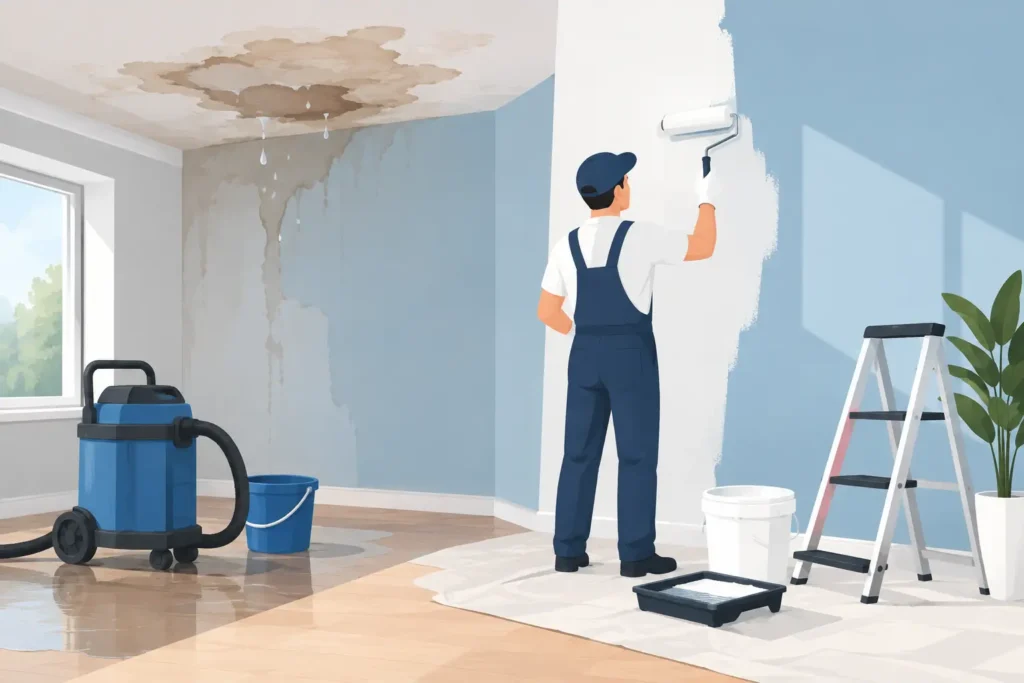
No paint system can compensate for an unresolved ceiling problem. Before work begins, the surface needs to be assessed for water damage, active leaks, loose drywall tape, cracks, peeling paint, mold concerns, and contamination. If a roof leak or plumbing issue is still active, painting first only hides the evidence temporarily. The stain will likely return, and the new coating may fail.
Preparation varies by ceiling type. Smooth drywall ceilings may need patching, sanding, stain blocking, and spot priming. Textured ceilings need a gentler approach so the existing texture is not damaged. Concrete ceilings may require cleaning, crack repair, and a coating designed to bond to masonry. Metal deck ceilings, pipes, ductwork, and exposed structural elements often need specialty primers or coatings based on the existing finish and operating conditions.
In older properties, the ceiling should also be evaluated before sanding, scraping, or disturbing old coatings. A qualified contractor plans the job around the condition of the building, not around a one-size-fits-all paint process.
Stains Need More Than a Top Coat
Water stains, nicotine residue, grease, and smoke damage can bleed through ordinary ceiling paint. A stain-blocking primer is often needed before the finish coat. Skipping this step may save time at the start, but it can lead to visible discoloration after the project is complete.
The same principle applies to glossy or previously coated surfaces. If the existing paint is sound but slick, it may need cleaning and mechanical abrasion to create a surface the new coating can grip. Where paint is failing, loose material must be removed instead of painted over.
Choosing the Right Paint and Finish
Commercial ceilings are not all painted with the same product. The best coating depends on the substrate, ceiling height, lighting, traffic, moisture exposure, ventilation, and maintenance expectations.
Flat finishes remain common for standard office and retail ceilings because they reduce glare and hide minor surface imperfections. They are a practical choice for suspended drywall ceilings and many acoustic tile applications when a compatible coating is used. The trade-off is that flat paint can be harder to clean than a higher-sheen finish.
For kitchens, washrooms, locker rooms, utility areas, and other moisture-prone locations, a more washable coating with mildew resistance may be appropriate. Warehouses and industrial facilities may need durable coatings that stand up to dust, humidity, temperature changes, or frequent cleaning. Exposed ceilings can require spray-applied coatings to reach joists, conduit, ducts, and complex framing efficiently.
Color matching also deserves attention. Ceiling white is not always a single standard. Existing finishes can vary from bright white to warm white or gray-toned white, and lighting can change how the final color appears. Testing an approved sample in the actual space helps avoid surprises once the full area is painted.
Access, Containment, and Safety Cannot Be Afterthoughts
The difficult part of ceiling work is often getting to the ceiling safely while protecting everything below it. A lobby with finished flooring and furniture requires a different setup than a vacant warehouse with 28-foot ceilings. Ladders may be suitable for limited repairs, but larger areas may require scaffolding, rolling towers, or aerial lifts.
A professional crew should protect floors, equipment, shelving, fixtures, and inventory before preparation or painting begins. In occupied buildings, containment is particularly important around dust-producing repairs and spray applications. Fixtures, fire alarm devices, sprinkler heads, vents, and cameras must be masked carefully or worked around without affecting their operation.
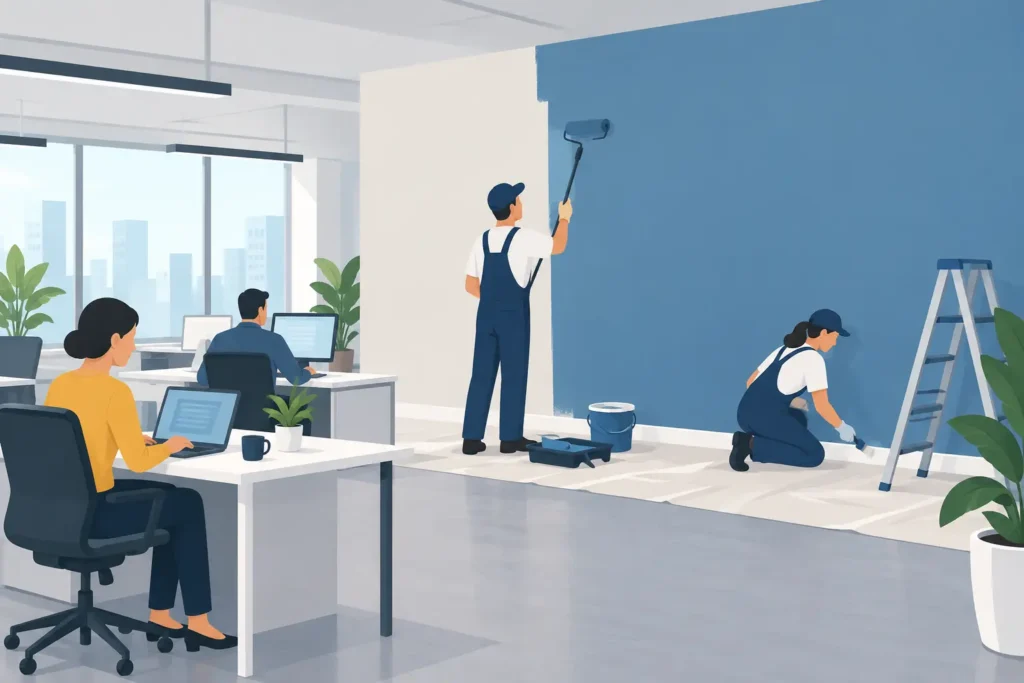
Scheduling is just as important. A contractor may complete work in sections, after business hours, overnight, or during weekends to reduce impact on staff and customers. For facilities that cannot shut down, the work plan should identify access routes, restricted zones, ventilation needs, drying times, and cleanup expectations before the first drop cloth is laid down.
When Spraying Makes Sense and When It Does Not
Spraying is often the fastest way to paint large open ceilings, especially in warehouses, parking structures, industrial spaces, and vacant commercial units. It can provide consistent coverage over exposed deck, pipes, ductwork, and structural steel. With the correct equipment and technique, it can also reduce labor time on large projects.
However, spraying is not automatically the best choice. In a furnished office, retail store with merchandise, or occupied condo common area, overspray control and masking can add substantial preparation time. Rolling and brushing may be more practical for smaller ceilings or areas with sensitive equipment and finishes below.
The decision comes down to the space. A reliable painting contractor will recommend the method that protects the property and meets the schedule, rather than choosing the fastest method for the crew alone.
Plan Commercial Ceiling Painting Around Operations
Facility managers and owners should treat ceiling painting as an operational project, not a simple maintenance task. Start with a clear scope: which areas are included, what repairs are required, what color and sheen are approved, and whether ceilings, ductwork, pipes, or structural elements are part of the same finish plan.
It is also wise to identify building rules before scheduling work. Some commercial properties require proof of insurance, lift approvals, after-hours access procedures, elevator reservations, loading dock coordination, or advance notice to tenants. In Toronto and across the GTA, these details can determine whether a project moves efficiently or loses time waiting for access.
A detailed quote should separate preparation, repairs, primers, finish coats, access equipment, protection, and cleanup where applicable. Approved pricing should match the actual site conditions. A low number that excludes necessary preparation is not a cost saving if the result fails early or requires another contractor to correct it.
What a Professional Finish Should Look Like
Once the project is complete, the ceiling should have even coverage, consistent color, clean cut lines, and no visible drips, roller marks, overspray, or missed areas. Repaired sections should blend into the surrounding surface as closely as the ceiling texture allows. Fixtures and equipment should be clean, protected, and fully operational.
The site should be left orderly as well. That means removing masking, collecting debris, clearing access equipment, and returning the area in usable condition. For a business, cleanliness is part of the service, not an optional extra.
JXF Painting Service approaches commercial ceiling projects with the same focus required for larger office, warehouse, industrial, and condo painting work: assess the surface, protect the site, use appropriate materials, and complete the work with minimal interruption. A well-planned ceiling refresh gives the entire space a more maintained appearance without forcing your operation to stand still.