

A garage floor can look clean on day one and start peeling by spring if the wrong product is applied over poorly prepared concrete. When comparing epoxy floor coating versus paint, the real question is not which option looks better in the can. It is which finish can handle your traffic, moisture conditions, cleaning routine, and expected service life.
For a lightly used storage room, a quality floor paint may be the practical choice. For a garage exposed to road salt, a warehouse with forklifts, or a commercial area that must stay presentable under heavy use, a professionally installed epoxy system usually provides the longer-lasting result. The difference comes down to chemistry, surface preparation, and the demands placed on the floor.
Epoxy Floor Coating Versus Paint: The Core Difference
Floor paint is typically a single-component product. It dries as solvents or water evaporate, leaving a colored film on the surface of the concrete. Premium concrete paints can improve appearance and provide modest protection, but they remain closer to a paint layer than a high-build protective system.
A true epoxy coating is generally a two-part material. The installer combines resin and hardener, triggering a chemical cure. Once cured, the epoxy forms a thicker, harder film that bonds tightly to properly prepared concrete. That chemical bond is why epoxy performs better against vehicle traffic, abrasion, many chemicals, and frequent cleaning.
The label can be confusing. Some products marketed as “epoxy paint” are single-component paints with a small amount of epoxy resin added. They can outperform basic latex floor paint, but they do not deliver the same durability as a properly installed two-component epoxy coating. Before approving a product, ask whether it is a true two-part system and what surface preparation it requires.
Where Floor Paint Makes Sense
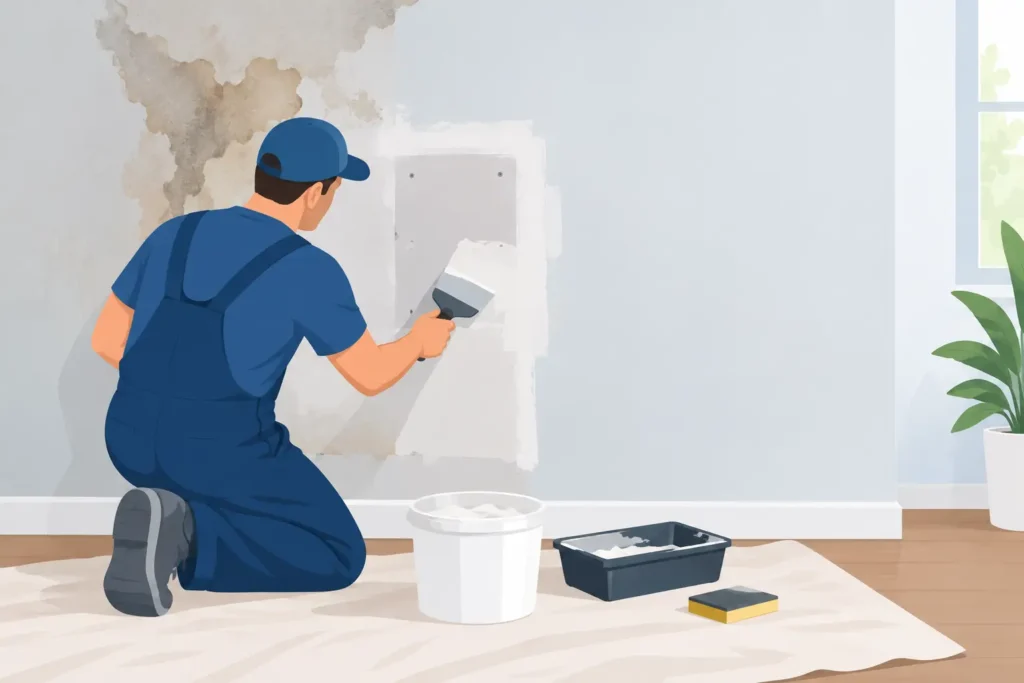
Paint is not automatically the wrong choice. It is often the right fit when budget, timing, and floor use are limited. A basement utility room, a low-traffic storage area, or a rental property that needs a quick visual refresh may not require the cost and preparation involved in a full epoxy installation.
A painted concrete floor is also easier to touch up. If a small section gets marked or worn, the area can often be cleaned, lightly sanded, and recoated without addressing the entire floor. That flexibility can be useful for owners who accept periodic maintenance in exchange for a lower initial cost.
However, paint has clear limits. Tires can lift paint from garage floors, especially when hot tires meet a warm slab. Road salt, oil, moisture vapor, dropped tools, and repeated sweeping can wear through the finish faster than many owners expect. Paint may also show roller marks and inconsistent sheen if it is applied over dusty, smooth, or contaminated concrete.
For property owners planning to sell, lease, or simply improve a lightly used area, paint can create a clean finished look. It should be selected with realistic expectations: it is a cosmetic coating with some protection, not a heavy-duty floor system.
When Epoxy Is Worth the Investment
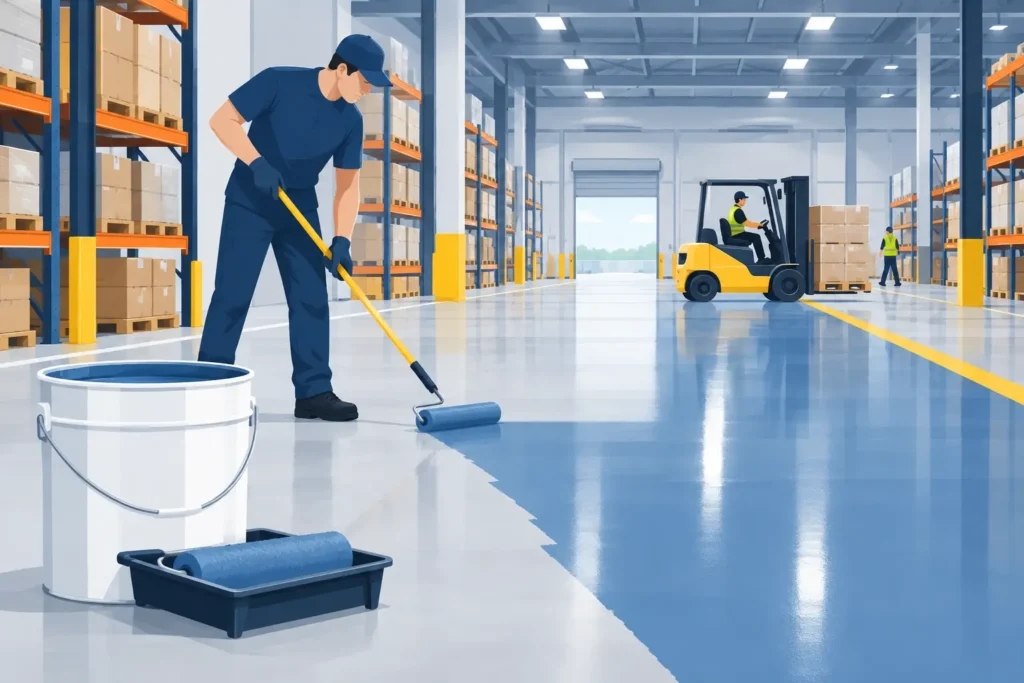
Epoxy earns its higher price where performance matters. In residential garages, it creates a dense, easy-to-clean surface that stands up better to oil drips, salt residue, tire marks, and everyday vehicle use. In commercial and industrial settings, it can support demanding environments where concrete is exposed to carts, equipment, foot traffic, cleaning chemicals, or routine impacts.
A properly specified epoxy system also gives owners more finish options. Solid colors create a clean uniform appearance, while decorative flakes help conceal dust and minor marks. Quartz and broadcast systems can provide added texture and a more industrial-grade finish. A clear topcoat can improve scratch resistance and make routine cleaning easier.
That does not mean epoxy is indestructible. A standard epoxy can yellow when exposed to strong sunlight, which matters near open overhead doors, exterior walkways, or bright storefront windows. In those locations, a UV-stable polyurethane or polyaspartic topcoat may be the better finishing layer. Epoxy also needs a dry, properly prepared substrate. If moisture is moving through the slab or the concrete has active cracks, coating over the issue will not make it disappear.
For garages, workshops, underground parking areas, warehouses, and service corridors, epoxy is usually the stronger long-term choice because it protects the concrete while improving the appearance of the space. It can reduce dusting, simplify cleanup, and give facility managers a more professional surface to maintain.
Surface Preparation Decides the Result
Most coating failures are not caused by the final coat. They begin underneath it. Concrete can hold dirt, oil, sealers, curing compounds, moisture, and weak surface material that prevent paint or epoxy from bonding correctly.
A professional coating project starts with an assessment of the slab. The crew checks for cracks, spalling, previous coatings, oil contamination, moisture concerns, and areas that may require repair. A smooth garage slab may look ready for coating, but it often needs mechanical grinding to create the profile required for a strong bond.
Grinding removes weak material and opens the pores of the concrete. Cracks and damaged sections should be repaired before coating. Oil-stained areas may need specialized cleaning or treatment. If a moisture test indicates excessive vapor transmission, the contractor may recommend a moisture-mitigating primer or a different flooring approach.
This preparation is a major reason epoxy installations cost more than a basic paint job. It is also the work that separates a floor that lasts from one that starts lifting around the edges. Cutting preparation to save money usually moves the expense into future repairs.
Compare Cost by Service Life, Not Just the Quote
Paint has a lower upfront cost because the material is less expensive and the installation process is simpler. For a small, low-use room, that can be a sensible decision. The issue arises when a paint system is used in a high-demand space and needs frequent recoating.
A professional epoxy floor generally costs more initially because it includes concrete preparation, repairs, multi-part materials, and a more controlled installation process. Yet it can deliver better value over time when it prevents concrete deterioration and reduces the need for repeated refreshes. The exact return depends on use, product quality, installation conditions, and maintenance.
For a homeowner, the practical calculation is often simple: how long do you plan to use the garage, and how much wear will it see? For a facility manager, consider cleaning labor, downtime, tenant or customer impressions, and the cost of repairing damaged concrete. A durable coating can be easier to justify when those operational factors are included.
Consider Toronto and GTA Floor Conditions
In Toronto and across the GTA, garage and parking-area floors face a hard winter cycle. Vehicles bring in salt, slush, grit, and water, then sit on the slab for hours. Over time, that exposure can contribute to surface scaling, staining, and concrete deterioration.
An epoxy system does not eliminate the need to clean salt and standing water, but it creates a more protective and maintainable surface than bare concrete or standard paint. For underground garages and commercial parking spaces, the coating system must also be selected for the exact traffic load, moisture conditions, and safety requirements. A decorative garage-floor product is not automatically suitable for a busy parking facility.
Maintenance Still Matters
Both paint and epoxy perform better when the floor is cleaned regularly. Sweep away abrasive grit, wipe up oil and chemical spills promptly, and avoid harsh cleaners that are not approved for the coating. Use a soft-bristle broom or appropriate floor-cleaning equipment instead of aggressive tools that can scratch the surface.
Epoxy is easier to maintain because it creates a more continuous finish, but it still benefits from care. Heavy impact can chip any coating, and dragging sharp metal items across the floor can leave marks. Address small areas of damage early, before moisture and contaminants reach the concrete beneath.
The Right Choice for Your Property
Choose floor paint when the area has light use, appearance is the main goal, and you are comfortable with future touch-ups. Choose a professionally installed epoxy system when the floor must handle vehicles, equipment, frequent cleaning, chemicals, salt, or a more demanding commercial environment.
The best finish is not the most expensive product on the shelf. It is the system matched to the condition of your concrete and the work your floor needs to do. A qualified on-site assessment can identify whether paint is enough, whether epoxy is justified, and what preparation is needed for a finish that looks professional long after the project is complete.