
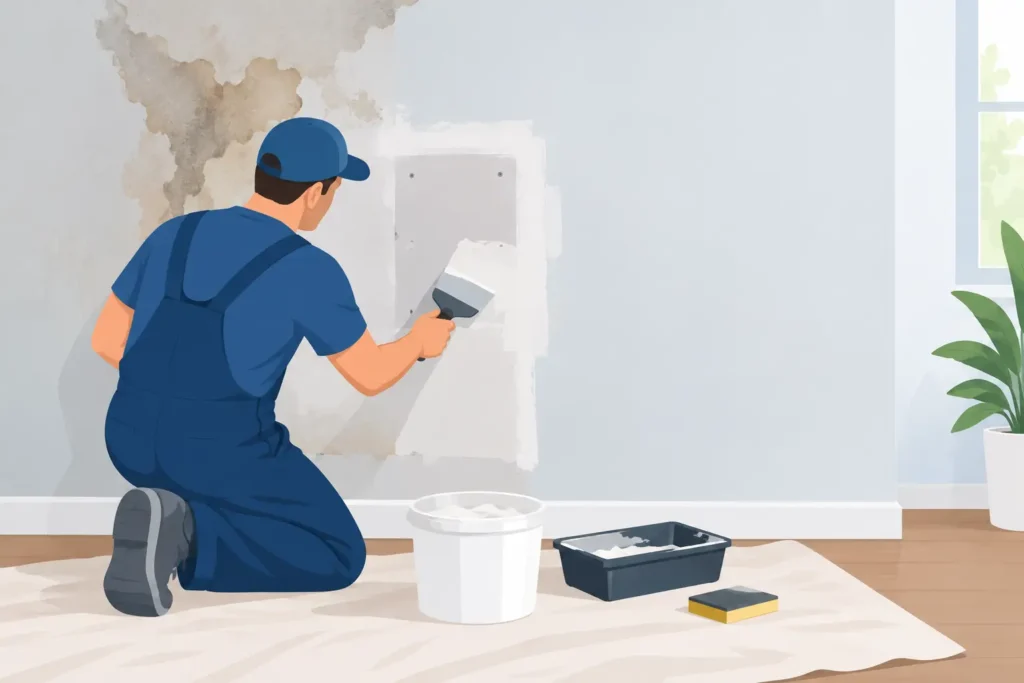

Fresh paint does not hide bad walls. It highlights them. If you skip drywall repair before painting, every dent, seam, nail pop, and patch can show through the final coat, especially under natural light or flat ceiling fixtures. That is why proper wall prep is not an extra service. It is the foundation of a clean, professional finish.
For homeowners, landlords, and property managers, this matters for both appearance and value. A room can have premium paint on the walls and still look unfinished if the surface underneath is uneven. In offices, condos, retail units, and rental properties, poor prep also creates a maintenance problem. Cracks reopen, patches flash, and the space looks worn out faster than it should.
Why drywall repair before painting matters
Paint is a finish coat, not a correction tool. It can improve color, brightness, and protection, but it will not level a bad patch or erase a damaged joint. In many cases, paint makes flaws more visible because sheen and lighting draw attention to surface changes.
That is especially true with eggshell, satin, and semi-gloss finishes. These products reflect more light than flat paint, so patched areas, sanding marks, and uneven texture stand out quickly. Dark paint colors can make this worse. So can side lighting from windows, hallway fixtures, or pot lights.
Proper drywall repair before painting solves those issues at the source. It gives the primer and topcoat an even surface to bond to, which helps the finished job look smooth, consistent, and durable.
What needs to be repaired before paint goes on
Not every wall needs major drywall work, but almost every paint project needs some level of surface correction. In residential spaces, the most common issues are nail pops, small dents, hairline cracks, peeling tape joints, old anchor holes, and corner bead damage. In commercial settings, you often see repeated impact damage, settlement cracks, patched utility openings, and wear around doors, hallways, and service areas.
Some repairs are cosmetic. Others point to movement, moisture, or poor previous workmanship. That distinction matters. A simple screw hole can be filled, sanded, and primed quickly. A recurring crack above a doorway or along a ceiling joint may need tape, compound buildup, and a more careful assessment before paint is applied.
Texture also plays a role. Smooth walls are less forgiving than textured surfaces because every repair is easier to spot. Matching an existing finish takes experience, especially when blending repaired areas into older walls that already have multiple coats of paint.
The right process for drywall repair before painting
Professional results come from process, not shortcuts. The first step is inspection. Every wall and ceiling should be checked under good light so defects can be identified before prep begins. This is where experienced painters and drywall repair crews save clients time. They know what will show after paint and what can be corrected efficiently.
Next comes surface preparation. Loose paint, weak compound, and damaged tape need to be removed. Dust, grease, and residue should be cleaned off so fillers and primers bond properly. If a wall has been patched several times before, feathering the surrounding area may be necessary to reduce ridges and uneven buildup.
Then the repair itself is completed with the right material for the job. Small dents and holes may need lightweight filler or standard joint compound. Deeper damage often requires setting compound, mesh or paper tape, and multiple coats to rebuild the surface properly. Corners may need bead replacement or reinforcement. Once dry, the repaired area is sanded smooth and blended into the surrounding wall.
After sanding, primer is critical. This is one of the most overlooked steps in drywall repair before painting. New compound absorbs paint differently than finished drywall, which can lead to flashing, dull spots, or visible patch outlines if primer is skipped. A properly primed repair creates a more uniform topcoat and helps the final finish look consistent across the entire wall.
Common problems when repairs are rushed
The fastest paint job is rarely the best value. When drywall prep is rushed, the same issues tend to appear over and over. You see patches that sink after drying, joints that telegraph through the paint, sanding scratches under direct light, and repaired spots that absorb paint differently from the rest of the wall.
Another common problem is poor sequencing. If repairs are done too late or not allowed to dry fully, painting crews end up coating over unstable surfaces. That can lead to cracking, bubbling, or visible shrinkage after the project is finished. In occupied homes and active commercial properties, rushed prep also means more dust, more touch-ups, and more disruption.
There is also the issue of mismatched expectations. Many clients assume paint will cover flaws they no longer want to see. In reality, paint sharpens the final appearance of the wall, for better or worse. If the prep is weak, the finish will reflect it.
When a simple patch is enough and when it is not
Some drywall issues are straightforward. A few picture-hook holes in a bedroom or a minor scuff in an office can often be patched and painted without extensive work. But larger holes, failed seams, water stains, and recurring cracks deserve closer attention.
Water damage is a good example. If drywall has softened, stained, or swollen, the source of moisture needs to be addressed before repair and paint. Otherwise the damage returns. The same goes for mold concerns, structural movement, or repeated cracking around windows and doors. These situations are not just paint prep issues. They are wall system issues.
For property owners managing rentals, condo units, or commercial interiors, this matters because surface damage may be tied to tenant wear, HVAC changes, building movement, or prior maintenance shortcuts. A professional assessment can separate cosmetic fixes from repairs that need a more durable approach.
Why professional prep delivers a better finish
There is a noticeable difference between a painted wall and a properly finished wall. The difference usually happens before the first coat goes on. Skilled crews understand how much filling is enough, how far to feather a repair, when to skim coat, and how to spot imperfections under jobsite lighting before the client sees them after completion.
That level of prep helps protect the paint investment. Better repairs mean fewer callbacks, fewer visible defects, and a more polished result across living rooms, hallways, offices, lobbies, retail units, and common areas. It also supports faster project delivery because the work is planned correctly from the start instead of being fixed after paint reveals the problem.
For busy property owners and managers, there is real value in having one contractor handle drywall repair and painting together. It keeps accountability clear, simplifies scheduling, and reduces the back-and-forth that often delays finishing work. That is one reason many clients choose a full-service contractor like JXF Painting Service for both prep and painting work.
Choosing the right finish after drywall repair
The paint finish you choose affects how forgiving the final result will be. Flat paint hides minor imperfections better, which makes it a common choice for ceilings and some low-traffic walls. Eggshell and satin offer more washability and a cleaner look in many residential and commercial interiors, but they reveal more surface variation. Semi-gloss is durable for trim and some utility areas, yet it is the least forgiving on imperfect walls.
This does not mean you should always choose the flattest product available. It means the wall prep has to match the finish level you want. If the goal is a crisp, higher-sheen look, the drywall work needs to be more precise.
What to expect from a professional quote
A proper quote for drywall and paint work should reflect the actual wall condition, not just the square footage. Surface damage, height, access, texture matching, number of repairs, and drying time all affect scope. In occupied spaces, furniture protection, dust control, and scheduling may also influence the plan.
Reliable contractors account for those details up front. That leads to clearer pricing, a cleaner jobsite, and fewer surprises once work begins. It also gives clients a realistic picture of how long prep and painting will take.
If you want walls that look sharp after the final coat, do not start with paint. Start with the surface. Good drywall repair before painting is what turns a repaint into a finished result that actually looks professional and holds up over time.