


A bad paint job shows up fast. You see lap marks in daylight, rough patches around repairs, paint on trim, and walls that looked good for a week but start scuffing almost immediately. That is why finding the best interior painting services is not just about getting a fresh color on the wall. It is about hiring a contractor who knows how to prep properly, protect the space, and deliver a finish that holds up.
For homeowners, landlords, property managers, and business owners, the right painter saves time, avoids rework, and protects the value of the property. The wrong one creates delays, mess, and extra cost. If you are comparing contractors, here is what actually matters.
What the best interior painting services really include
Interior painting should never be treated as a simple brush-and-roll job. Good results depend on the condition of the surface, the type of room, the finish you want, and how the crew manages the work from start to finish.
The best interior painting services start with a proper assessment. That means looking at wall damage, nail pops, cracks, water stains, old patchwork, peeling areas, and previous paint buildup. If a contractor quotes quickly without asking about surface condition, ceiling height, trim detail, or occupancy, that is usually a sign the scope is not being evaluated carefully.
A professional scope also covers more than walls. In many projects, ceilings, trim, doors, baseboards, frames, cabinets, stairwells, and drywall repairs all affect the final result. If these items are handled by different trades or ignored until halfway through the job, costs and timelines usually start to drift.
For commercial interiors, there is another layer to consider. Offices, retail spaces, warehouses, and condo common areas often need scheduling around business hours, tenant access, building rules, and safety requirements. A contractor who can paint well but cannot manage operations is not the right fit for that kind of environment.
How to tell if a painter is worth hiring
The first thing to look for is process. Reliable painting contractors have a clear way of handling quoting, preparation, execution, touch-ups, and cleanup. They do not rely on vague promises. They explain what is included, what is excluded, and what conditions could affect pricing.
Insurance, licensing, and experience matter for a reason. Interior painting may look low risk, but once ladders, repairs, occupied units, and commercial spaces are involved, professionalism is not optional. You want a contractor that is established, accountable, and equipped to handle the project without improvising on site.
Cleanliness is another major indicator. Strong painters protect floors, furniture, fixtures, and adjacent surfaces before they open a can of paint. They mask carefully, maintain an orderly work area, and leave the property in usable condition. This matters in homes, but it is especially important in offices, condos, and rental properties where disruption has a direct cost.
Communication is where many contractors separate themselves for the wrong reasons. Good painting companies confirm timing, explain progress, and address scope changes before they become problems. If the estimate is unclear or calls are already slow before the project begins, that usually does not improve once work starts.
Best interior painting services for different property types
Not every interior project should be handled the same way. A single-family home repaint has different demands than a condo turnover or a commercial facility refresh.
In homes, the focus is usually appearance, cleanliness, and detail. Homeowners tend to care most about sharp lines, smooth walls, low disruption, and help selecting the right finish for living rooms, kitchens, bedrooms, and hallways. Prep work is critical here because lighting makes surface flaws obvious.
In rental units and condos, speed and consistency often matter just as much as appearance. Landlords and property managers usually need fast turnarounds between occupants, durable coatings, and crews that can work efficiently without sacrificing quality. In occupied condo buildings, elevator booking, building access, and noise control also come into play.
For offices and commercial interiors, durability and scheduling carry more weight. The finish still needs to look professional, but the contractor also has to work around staff, customers, equipment, and operating hours. In these spaces, a well-run project is just as valuable as the paint itself.
Industrial interiors have another set of standards. Surface condition, coating performance, safety, and downtime become central issues. That kind of work requires broader technical capability than a typical residential painter can offer.
What a proper quote should tell you
A painting quote should be detailed enough that you know what you are paying for. If it only lists a total price with a vague line about painting rooms, you are missing important information.
A solid quote usually defines the surfaces being painted, the prep included, the number of coats, repair allowances, protection measures, and whether ceilings, trim, doors, or specialty surfaces are part of the price. It should also make clear if the contractor is supplying labor and materials, and whether premium products or specialty finishes affect cost.
Low quotes can be tempting, but they often leave out prep, patching, stain blocking, sanding, or full coverage. That is where a job can look affordable at first and expensive by the end. On the other hand, the highest quote is not automatically the best. The goal is approved pricing tied to a clear scope and reliable execution.
Prep work is where quality is decided
Most people judge painting by the final color, but professionals know the finish is decided before painting begins. Surface prep is what separates a clean, durable result from a short-term cosmetic fix.
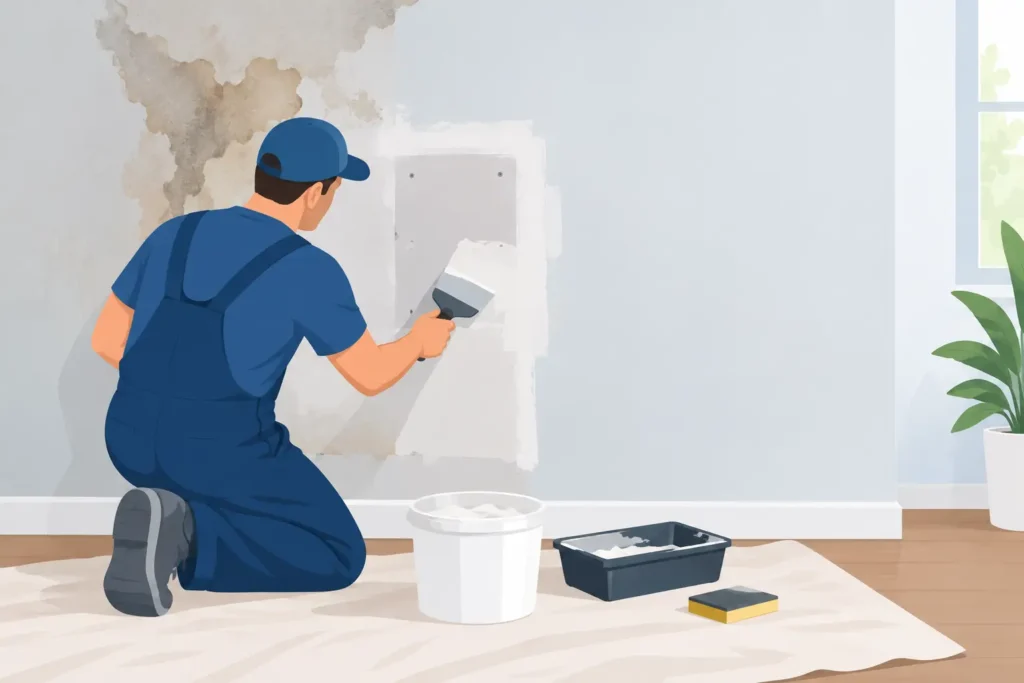
That includes filling holes, repairing drywall damage, sanding uneven patches, caulking gaps, priming problem areas, and creating a sound base for the finish coats. If walls have stains, smoke residue, moisture damage, or old failing paint, those issues have to be addressed directly. Painting over them does not solve anything.
The same goes for trim and doors. These areas need careful prep because brush marks, debris, and chipped edges are easy to spot. In kitchens or high-traffic areas, the wrong product choice can also lead to premature wear.
This is one reason experienced full-service contractors have an advantage. They can handle paint and surface correction together instead of treating prep as an afterthought. If drywall repair, popcorn ceiling removal, or trim work is needed before painting, coordinating it under one scope usually leads to better results and fewer delays.
Why speed matters, but only when it is controlled
Most clients want fast service, and rightly so. Painting disrupts daily routines, business operations, and tenant turnover schedules. But speed only helps if the project is organized.
A disciplined crew can move quickly because the work is planned, the materials are ready, and each stage is handled in order. Rushed crews without a system usually skip prep, compress drying times, and leave punch-list items behind. That is not efficiency. That is deferred cost.
The best interior painting services balance speed with workmanship. They show up when scheduled, keep the job moving, and still leave behind straight cuts, even coverage, and clean spaces. That balance is especially important in occupied properties where delays affect more than just appearance.
Why many clients choose a contractor with broader capability
Interior painting rarely stays limited to one task. A project that starts with repainting walls often turns into ceiling work, trim updates, drywall repair, cabinet painting, or stain and odor coverage. In commercial settings, the scope can expand even further across offices, common areas, warehouses, or mixed-use spaces.
That is why many property owners prefer a contractor who can manage multiple surface improvement needs under one roof. It reduces coordination, shortens timelines, and gives the client one accountable team instead of several moving parts.
For clients across Toronto and the GTA, JXF Painting Service fits that model by handling residential, commercial, industrial, and condo painting work with the same focus on workmanship, cleanliness, and dependable delivery. That range matters when a project grows beyond a basic repaint.
Questions worth asking before you book
Before hiring any painter, ask how they handle surface repairs, what protection they use inside occupied spaces, how they schedule around residents or staff, and what the quote actually includes. Ask who will be on site, how touch-ups are handled, and what happens if hidden wall damage is found after work begins.
These are not minor details. They tell you whether the contractor is prepared to run the job professionally or simply paint what is visible and move on.
The right interior painter should make the process easier, not more complicated. If the estimate is clear, the crew is experienced, and the company has the structure to deliver clean work on time, you are already closer to a result that looks better and lasts longer.
Fresh paint changes a space quickly, but the real value is peace of mind. When the work is done properly, you stop thinking about the contractor and start enjoying the room, the unit, or the building the way you expected to from the start.