

A rushed office paint job shows up fast. You see it in uneven cut lines, scuffed baseboards, missed wall repairs, and crews that slow down your staff more than the actual work improves the space. Hiring the right office painting company is not just about changing wall color. It is about protecting your workplace, your schedule, and the way your business presents itself every day.
For business owners, property managers, and facility teams, the standard should be higher than basic coverage on the walls. Offices need careful planning, low disruption, and finishes that hold up under daily traffic. If a contractor cannot manage occupied workspaces, coordinate around operations, and leave the site clean at the end of each shift, the low quote stops looking like a deal.
What a professional office painting company actually does
A reliable office painting company does more than send painters with rollers and drop sheets. The job starts with a site review, a clear scope of work, and an honest discussion about timing, access, surface condition, and finish expectations. Offices often have a mix of drywall, trim, doors, metal frames, meeting rooms, reception areas, kitchens, and high-touch common spaces. Each one needs the right prep and the right product.
Professional execution starts before the first coat goes on. That means protecting floors, furniture, workstations, and equipment. It means repairing dents, cracks, nail pops, and other wall damage so the final result looks finished instead of patched over. It also means understanding where durable washable paint matters most, especially in corridors, lunchrooms, entrances, and shared areas.
The difference is usually in the discipline. Good commercial painters show up on time, work to the agreed scope, keep the site orderly, and communicate clearly if conditions change. That is what keeps office projects moving without creating avoidable problems for tenants, employees, or customers.
Why office painting is different from other commercial work
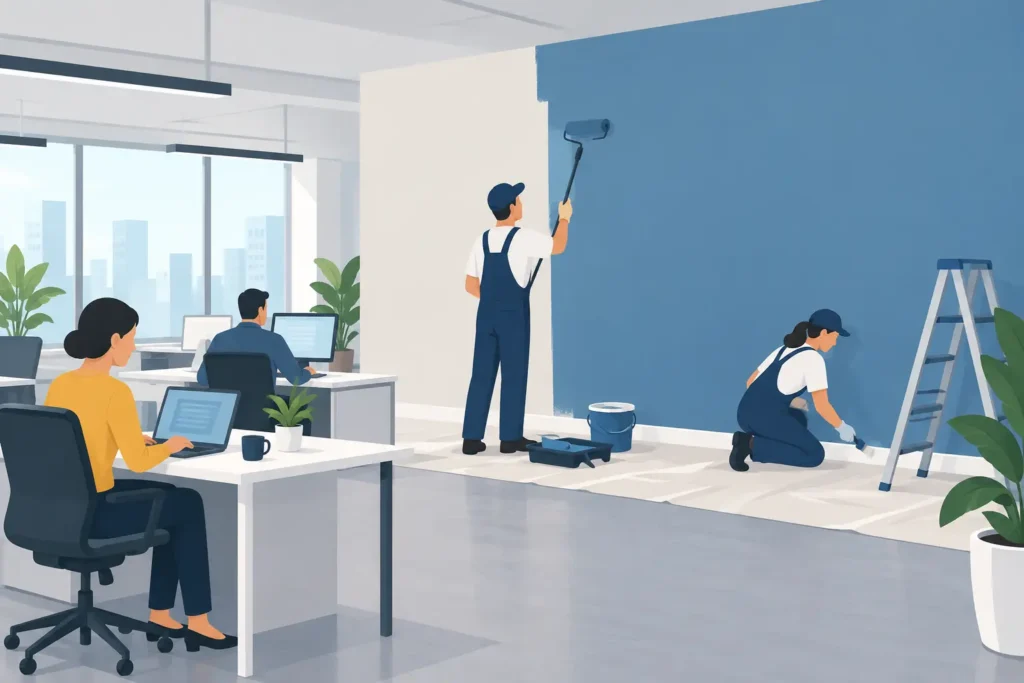
Not every commercial space works the same way. An office has its own pressure points. There may be executive offices that need privacy, boardrooms that cannot be out of service for long, or open-plan areas where noise and odor need to be controlled. In some workplaces, evening or weekend scheduling is the only practical option. In others, work can happen in phases during business hours if the crew knows how to isolate sections properly.
That is why experience matters. A painter who mostly handles empty units or simple retail spaces may not be equipped for an active office environment. Offices call for more coordination, more surface protection, and more attention to appearance. Staff notices the details. Clients notice them too.
There is also a branding component. Paint affects how professional a workplace feels. A clean, sharp interior supports confidence. Faded walls, marked-up trim, and inconsistent touch-ups send the opposite message. For companies bringing in clients, recruits, or partners, those visual cues matter more than many owners realize.
Signs you are hiring the right office painting company
The right contractor will not be vague about process. They should be able to explain how they handle prep, surface repairs, product selection, access planning, cleanup, and final review. If the answers are soft or generic, expect the same level of care once the job begins.
Clear pricing matters too. Office painting estimates should reflect the actual scope, not just a rough number meant to get a signature. That includes wall areas, trim, doors, ceilings if needed, repairs, number of coats, and any scheduling requirements that affect labor. Cheap quotes often leave out prep time, patching, protection, or premium products. Those omissions usually come back later as change orders or disappointing results.
Credentials are another filter. For commercial properties, you want a contractor that is licensed, insured, and used to working in professional environments. That protects the property owner and shows the company operates like a real business, not a temporary crew picked up for the week.
A dependable contractor should also have enough manpower to complete the project on schedule. One or two painters may be fine for a small suite refresh. A larger office, multi-floor project, or phased repaint needs a crew that can keep up without sacrificing finish quality.
How the best office painting projects are planned
Good planning saves money even when the upfront quote is not the lowest. That is because disruption has a cost. If staff productivity drops, meeting rooms are unusable, or the project drags into extra days, the real price climbs quickly.
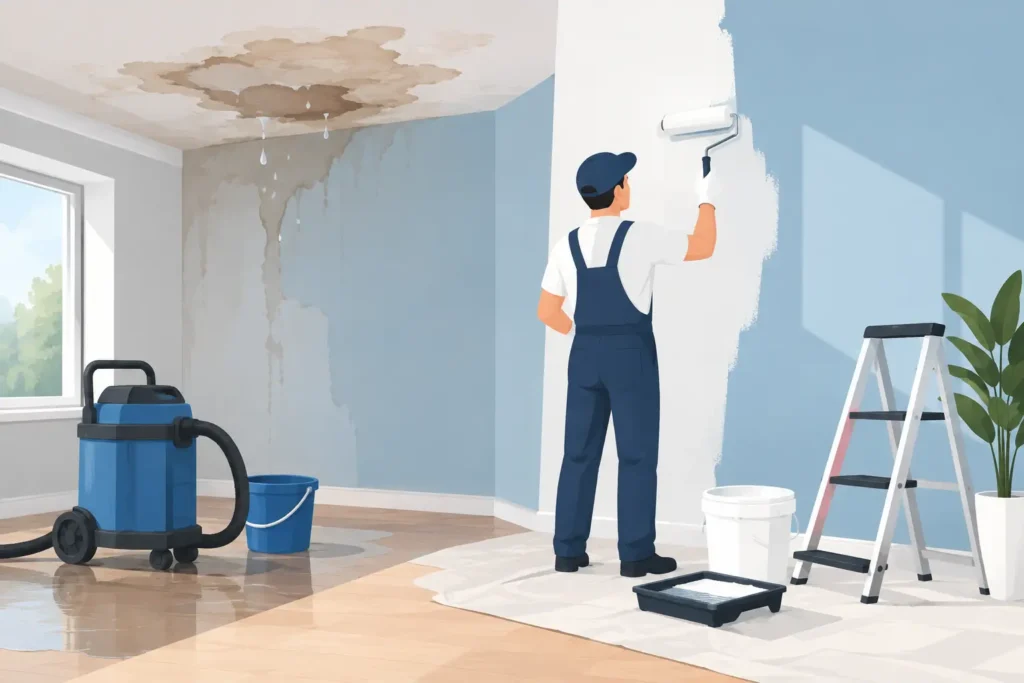
The best office painting company will break the job into workable stages. They will identify high-priority zones, active work areas, after-hours needs, drying times, and any special access concerns. They will also flag conditions early, such as damaged drywall, water stains, or previous paint failure that needs correction before repainting.
Color and sheen selection should be practical, not guesswork. Flat paint can hide wall imperfections, but it is not always ideal in high-contact zones. Eggshell or satin may offer better washability, though they can reveal surface flaws if prep is weak. Semi-gloss often makes sense on trim and doors because it stands up to more cleaning. The right choice depends on how the space is used.
That is where a contractor earns trust. Instead of pushing one standard system for every room, they should match the finish to the traffic level, maintenance demands, and look you want to achieve.
What can go wrong when office painting is handled poorly
Most bad office painting jobs fail in predictable ways. Prep gets skipped. Wall damage is not repaired properly. Surfaces are dusty or greasy when paint is applied. The crew underestimates the time required and starts cutting corners to finish. Cleanup becomes an afterthought.
The result may still look passable from a distance on day one. By week three, the issues start showing. You notice flashing in patched areas, peeling near trim, roller marks in conference rooms, and door frames already scuffed or chipping. At that point, the business has paid for the disruption but not received the value.
Poor communication creates another set of problems. If no one is coordinating access, your staff ends up moving items, answering questions, and working around avoidable confusion. That is not a minor inconvenience. It is lost time and unnecessary friction inside an already active workplace.
Choosing an office painting company for occupied spaces
Occupied offices require a different level of control. Dust containment, odor management, and daily cleanup are not extras. They are part of doing the job right. Paint products may need to be selected for lower odor depending on ventilation and occupancy. Crews should know how to protect technology, furniture, and shared surfaces without slowing everything down.
Phased execution is often the smartest approach. Reception areas, executive offices, break rooms, hallways, and meeting rooms can be completed in sequence so business operations stay functional. This works especially well in larger offices across Toronto and the GTA, where companies often need improvements completed without shutting the space down.
This is also where experience with broader commercial work helps. A contractor used to handling offices, warehouses, condo common areas, and mixed-use properties tends to be better at logistics. JXF Painting Service has built its reputation on that kind of practical delivery – professional crews, clean work, clear communication, and dependable scheduling.
What to ask before you approve the quote
Before signing off, ask how surface repairs are handled, what protection methods are included, whether the work can be phased, and how long each area will be out of use. Ask what paint systems are being specified and why. Ask who supervises the crew and how issues are communicated if they come up mid-project.
You should also ask what the final walkthrough looks like. A serious contractor does not treat completion as simply packing up tools. There should be a review of the finished work, touch-up of any missed spots, and a clear handoff once the space is ready for normal use.
These questions are not about being difficult. They are how you separate professional contractors from painters who are only competitive on price.
A well-painted office does more than freshen the walls. It supports the image of the business, improves the working environment, and shows people the space is cared for. If you choose a contractor that understands scheduling, prep, communication, and finish quality, the job feels organized from the first walkthrough to the last touch-up. That is the standard worth paying for.